


Postpartum Sex: Thriving After Baby
By Aline Arcis
|
Summarize this article with AI


Baby is here! You come home and start a new life with your newborn. You'll finally be able to cuddle and get to know them.
We know the first few weeks are the hardest. Between childbirth fatigue and a baby who doesn't sleep through the night, you need time to find your rhythm. It's a real challenge individually and for your relationship.
It's hard to find the energy (and the desire) to resume sexual activity. In fact, healthcare professionals generally recommend not resuming penetrative intercourse in the month following childbirth. But how do you maintain intimacy? How do you preserve your relationship if you have no libido?
We'll explain.
Sexuality after childbirth: new parameters to consider
Fluctuations in desire after childbirth
First thing to keep in mind: you shouldn't put pressure on yourself if you don't feel like having sex. Your body has undergone major hormonal changes in recent months. Now, it has just delivered the human being it created from scratch! It has worked hard!
We know that women experience a significant drop in hormones after childbirth. We sometimes speak of baby blues to describe the low mood in the baby's first days. Be careful though not to confuse baby blues with postpartum depression: baby blues is a temporary feeling of sadness that doesn't last, whereas postpartum depression is a serious mood disorder that absolutely must be treated.
With what your body and hormones are going through, there is not much room left for sexuality. Your energy and thoughts are entirely directed towards your baby and your recovery, which is completely normal!
A disrupted relationship with one's body
Another important factor to consider: some women don't really recognize their bodies in the weeks following childbirth. Again, you've just produced and given birth to a human being, so it's possible that your body bears the marks of the past 9 months.
Episiotomy, stretch marks, cesarean scar, weight gain… all new marks that need to be tamed.
Don't rush, give your body time to recover gently: while some changes may seem impressive at first, the marks of pregnancy gradually fade.
Then, don't neglect the psychological aspect. Be gentle with yourself and free yourself from the beauty standards you're bombarded with all day long on social media or TV. Your body has only one reality: yours. Be grateful for all the work it has done in recent months, pamper it, gently rediscover your intimacy.
There's no pressure to immediately return to sexual activity, everyone has their own timing!
Rethinking the couple in postpartum
Postpartum doesn't just shake bodies, it also shakes up couples. Where you were once a conjugal, loving, intimate couple, you now also become a parental couple. And that completely changes the game.
Accumulated fatigue, new routines, broken nights, mental load running wild… all of this can create distance, sometimes without you even realizing it. While you're finding your new rhythm, it's normal to feel a little less connected to each other.
The challenge, little by little, will be to reinvest in your duo, not just as parents, but also as partners. Find moments where you exist outside of bottles, diapers, and laundry.
For some women, the relationship with their body changes profoundly: the body is no longer experienced as an object of desire, but as a tool for motherhood, nurturing, functional. And that can make the very idea of sexuality a bit blurry, even uncomfortable.
This phenomenon is also very well explored in an episode of the podcast Tout sur Elles, dedicated to the Babyclash, which highlights this silent crisis that many couples go through after the arrival of a child. Talking about it, already, is often a first step to breaking out of isolation.
How to find a fulfilling sex life in postpartum?
Respecting your rhythm and taking care of yourself
First rule: don't compare yourself. Statistics can be interesting, but they are not a roadmap. Some people resume sexual activity within the first two months, others need much more time. And all of that is perfectly okay.
There's the body's time, and the mind's time. Finding the balance between the two is essential. Sexuality is neither a race, nor an obligation, nor a "return to normal" to check off a to-do list.
Before even thinking about sexual intercourse, start by reappropriating your body. Gently resume physical activity, moisturize your skin, take baths, massage yourself, breathe... all small gestures that help recreate a connection with yourself.
Also take advantage of postnatal consultations to discuss these topics with your midwife or doctor. These appointments are not just for your baby: your well-being matters just as much.
Communicating your feelings with your partner
Communication is a central pillar of postpartum. Letting tensions settle in silence is often more detrimental than daring to put words, even clumsy ones, to what you feel.
Talk to your partner. Ask him or her how they are experiencing this period, what they need, how they feel about your changing body, your fatigue, your possible lack of desire.
It can be difficult, especially for some men, to project themselves into the reality of women's bodies after childbirth. Verbalizing helps avoid misunderstandings: no, you don't love your partner less, no, he or she is not less desirable. A lot is just happening, physically and emotionally.
Understanding the other's level of fatigue, sensitivity, and limits helps recreate security in the couple. And an important reminder: for libido to express itself, primary needs must be met. Eating enough, sleeping (a little), feeling supported... then we can talk about desire.
Reinventing intimacy in postpartum
Resuming sexual activity does not necessarily mean resuming with penetration. Far from it. Postpartum is often an invitation to reinvent intimacy.
Focus first on sensuality: caresses, tender gestures, attention to the other, gratuitous affection. Explore other erogenous zones, without aiming for performance or orgasm.
Slow sex can be a real resource: slowing down, taking the time to feel, listening to your body before trying to "do as before." Mindfulness or Sensate Focus also allow you to put sensations back at the center, without pressure for results.
Building desire without necessarily taking action can also rekindle libido: naughty messages, lingering glances, small knowing gestures. The idea is not to force it, but to gently reintroduce desire into daily life, until the urge is truly there.
Perineal rehabilitation: don't skip it
We conclude with an essential point: perineal rehabilitation. It generally begins from the 8th week after childbirth and deserves your full attention.
Why? Because a fit perineum is not just a question of incontinence. It is also a question of sensations, pleasure, and confidence in one's body. Rehabilitation allows you to gradually regain control of this area, often severely tested during pregnancy and childbirth.
Several options exist:
-
hypopressive gymnastics;
-
Kegel balls, to progress at your own pace at home;
-
physiotherapy sessions, covered by health insurance.
Beyond the medical aspect, these sessions are also time for yourself. A moment to reconnect with your sensations, recenter yourself, and do yourself good.
Because finding a fulfilling sex life in postpartum is not about "going back to before," it's about inventing a "then" that suits you, an intimacy in which you feel good. Trust yourself, take your time, and talk about it with your partner. It's an adventure to experience together.
en/en/
Aline Arcis
You will surely like it
-

Kegel balls
49,00€ -

Lubricating Intimate Gel
13,00€ -
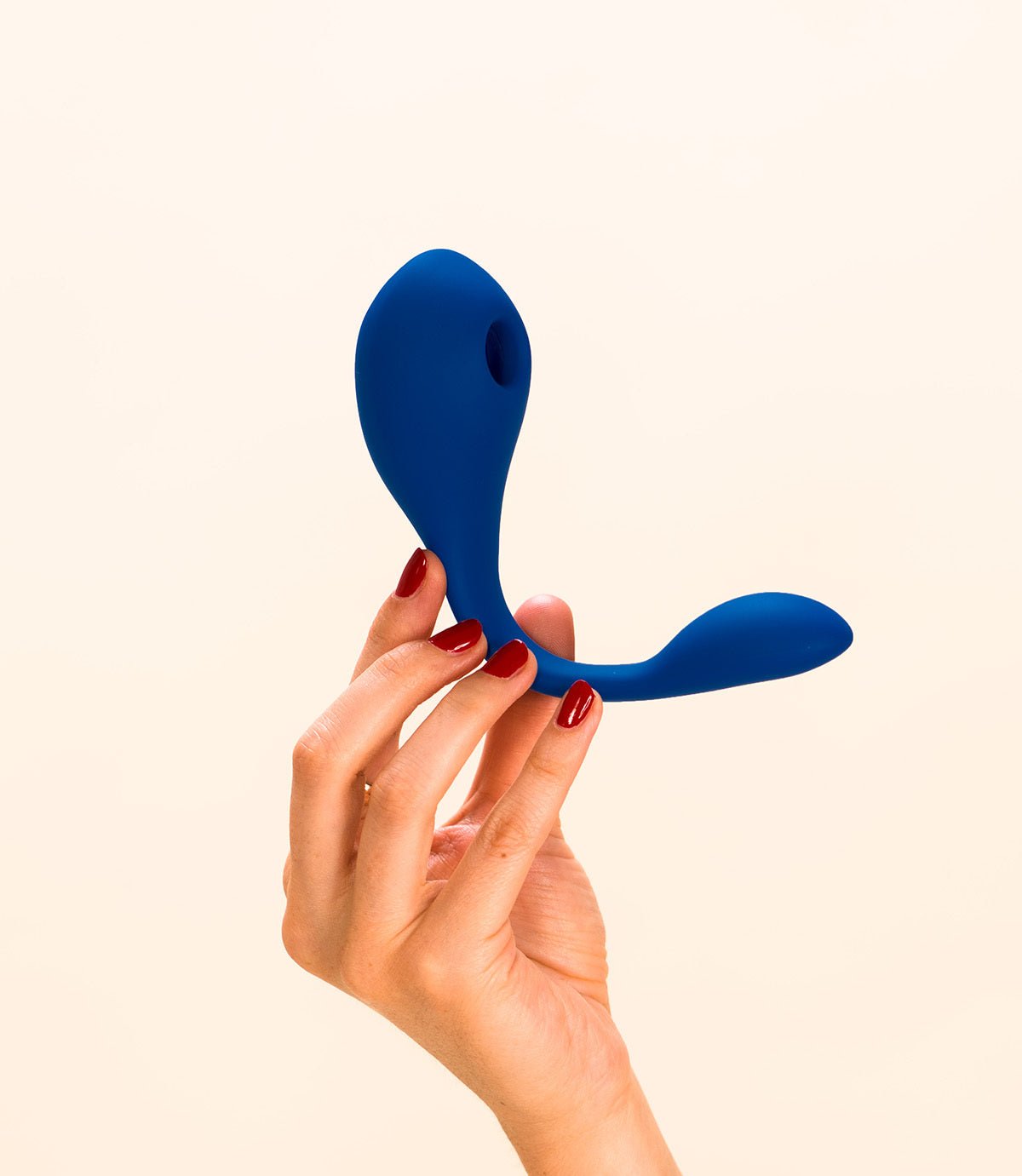
Coco
119,00€ -

Libido & Lubrication Cure
35,00€

Kegel balls

Lubricating Intimate Gel
Coco

Libido & Lubrication Cure


