


Why do women squirt?
By Marie Comacle
|
Summarize this article with AI


What if women ejaculated too?
Mmmh, no. While Hippocrates believed that the emission emitted by women was as fertile as that of men, we now know that in fact, squirting is the emission of a significant amount of fluid, sometimes mixed with a little urine (up to 300 ml can be produced at once!), before, during, after, or even without orgasm.
"Squirting" means "squirting" in English. All women can squirt, contrary to what the term " fountain woman " might suggest.
The phenomenon of "female squirt" has been studied for several decades, but remains controversial in some publications.
The information in this article is for educational purposes only and is not a substitute for medical advice.
This article discusses female ejaculation, the G-spot (or rather, the G-zone), pleasure, sex, and intimacy. Everything related to women's sexual health and well-being is still poorly studied, underrepresented, and often misunderstood, which is why we put so much heart, rigor, and enthusiasm into it.
Enjoy your reading!
Squirt, female ejaculation, fountain emission: let's clarify the terms
First, a quick vocabulary reminder, because the terms are often confused.
Female ejaculation
Female ejaculation refers to the expulsion of a whitish, viscous fluid, released in small quantities by the Skene's glands (located around the urethra) during orgasm or intense stimulation. Its composition is similar to that of male ejaculate (it notably contains PSA, a prostate-specific enzyme).
Squirt or fountain emission
This corresponds to a much more copious expulsion of clear fluid , often in a jet. It does not come from the same glands and is thought to be a mixture of very dilute urine, vaginal secretions, and possibly other internal secretions.
Conclusion? You can squirt without ejaculating, and ejaculate without squirting . And some women even experience both… separately or together!
What is squirting?
In English, squirting literally means “squirting”.
The term “female fountain” may suggest that this phenomenon concerns a select minority, but in reality, all women are capable of squirting , under certain physical and psychological conditions.
Some studies, such as those by Salama & Desvaux, have documented the role of the paraurethral glands (or Skene's glands) in the production of the emitted fluid. These glands are sometimes referred to as the " female prostate ".
Fun fact: if you've just gone to the bathroom, the fluid you pass will be clear, odorless, and very similar to enriched vaginal fluid. If your bladder is full, some regular urine may also be present. Nothing serious, nothing dirty.
In the context of sexual health, these emissions are therefore not disorders, but physiological responses.
“Squirting is a normal bodily function, but still taboo” Dr. Samuel Salama , gynecologist and author of Women Fountains, Myth or Reality?
Is squirting urine?
Yes. As @wicul explains very well in several Instagram posts, squirting is indeed urine !
Experts Pierre Desvaux and gynecologist Salama Samuel confirmed in 2015, following a study, that this fluid does indeed originate in the bladder and is expelled through the urethra . Just like urine, this "fountain" emission is composed of water, urea, creatinine, and uric acid!
A 2014 study published in The Journal of Sexual Medicine showed that the fluid emitted during squirting does indeed come from the bladder, confirming its urinary nature in 100% of the cases observed.
What is the difference between squirting and female fountain?
The term "fountain woman" is a nickname given to a woman who has experienced the expulsion of a large amount of fluid during sexual intercourse. Squirt, on the other hand, is the name of the phenomenon itself. It is therefore a physiological fact (hence the English term), and not a label.
The confusion often stems from its portrayal in pornographic content, which turns it into a show, whereas in reality, female squirting is not a performance at all. The wrong words are used, it's misrepresented... and ultimately, everything gets mixed up!
Why do women squirt?
Because it's possible, natural, and sometimes uncontrollable!
Female ejaculation is a reflex response triggered by stimulation of the Skene's glands and internal tissues of the vagina, particularly around the G-spot .
The French Association of Urology (AFU) points out that 10 to 54% of women report having already experienced some form of squirting during their sexual lives.
This answer is made easier when there is:
-
Sufficient hydration,
-
prolonged stimulation of the G-spot
-
complete trust with one's partner,
-
Total surrender of the mind.
Spoiler alert: trying too hard to squirt can actually inhibit the process. We recommend focusing on the sensations instead…
How to squirt?
All women can be stimulated to achieve squirting. But it's not always easy… You need to be in the right frame of mind, have 100% trust in your partner, who in turn must have THE technique.
And this technique isn't something he/she has to discover alone, because it's unique to each person. Knowing your own body can be a huge help!
Start by stimulating the clitoris . Then, with one or two fingers, stimulate the G-spot to increase pressure on the Skene's glands! Make circles, taps, the motion of someone telling someone to come…
Masturbating will help you get to know your body as a whole : what you like, what you don't like, where your clitoris is, how sensitive it is, how your vagina lubricates during stimulation…
It's a true exploration of yourself! The important thing is to take time for yourself and enjoy it.
As you've probably gathered, orgasms and squirts are not the same thing; one can exist without the other!
Step 1: Relaxation and letting go
Squirting doesn't happen under pressure. For the body to release this fluid, it must first be relaxed, the pelvic floor must not be tense, and the perineal area must be at ease. A stressful atmosphere or pressure to succeed = zero chance of releasing anything.
When you feel the urge to urinate, relax . This isn't normal urine; it's a sign that it's working. If it doesn't come out, try again later, and above all, without pressure.
The hardest part isn't the technique. It's letting your body do what it knows how to do. Many women feel they have to hold back, for fear of "wetting themselves." This mental block prevents the necessary release. But squirting requires letting go, arousal, regular stimulation, and genuine trust in your sensations.
Step 2: Hydration
Squirting is a phenomenon that often involves the bladder. Many women experience a sensation similar to needing to urinate just before squirting. And that's NORMAL. It can be helpful to drink a little water before an exploratory session , without going so far as to hold it in completely. The pressure of the stimulation combined with a relaxed pelvic floor may be enough to trigger the expulsion of the fluid.
Remember to protect the sheets, just in case!
Step 3: External Stimulation
Start with the clitoris (which should never be forgotten) to increase arousal. The higher the arousal, the more the Skene's glands fill with fluid.
Step 4: G-spot stimulation
The famous “G-spot” is an area located approximately 4 cm from the vaginal opening , on the anterior wall (towards the navel). It is actually composed of tissue rich in nerve endings, sometimes directly connected to the Skene's glands and the bladder.
Stimulating it, by gently pressing with a back-and-forth or rhythmic pressure motion, can cause intense sensations and trigger female ejaculation or a squirting emission.
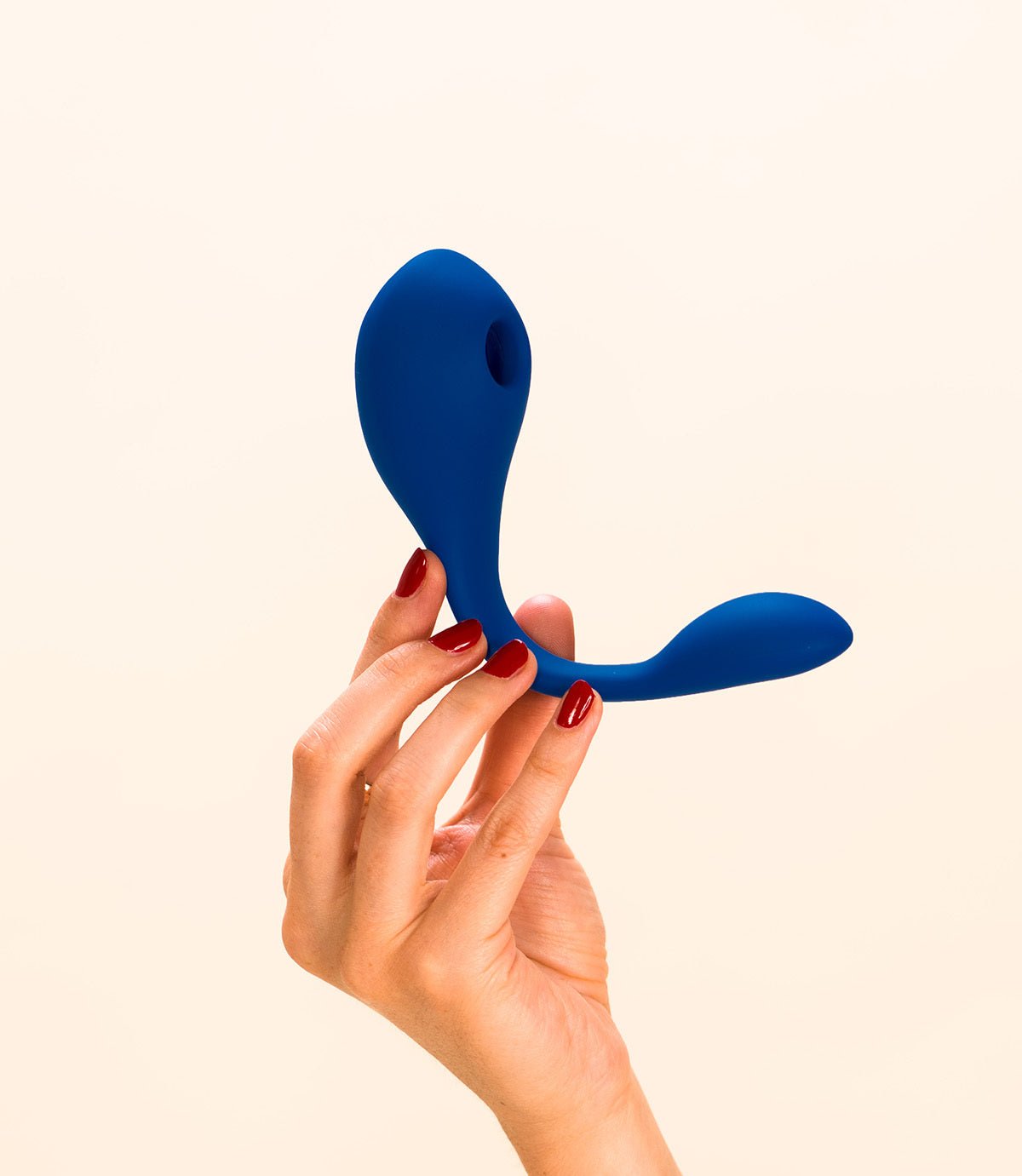
To find your G-spot for the first time, it's easier to use a suitable vibrator. Coco provides dual stimulation, and its vibrating head is perfectly rounded to reach the G-spot!
Insert one or two fingers (or a curved vibrator like the Coco) and make the famous upward hooking motion towards the pubic area. Tap, squeeze, explore.
In summary:
-
Slide one or two fingers into your vagina
-
Bend slightly upwards
-
Touch a slightly rough area 3-5 cm from the entrance
-
Stimulate this area consistently (tapping, circles)
-
Combine with clitoral stimulation
According to sexologist Shere Hite , 95% of women reach orgasm through clitoral stimulation . The G-spot is therefore not a requirement, just a great avenue to explore.
The book "Women Fountains & Female Ejaculation" by Salama & Desvaux confirms that this stimulation is the most effective way to trigger squirting, without pain or risk. 📚
Step 5: Positions and rhythm
Certain positions are particularly conducive to G-spot stimulation: lying on your back with your legs raised, on all fours, or sitting cross-legged. The important thing is to experiment without judgment . Sex can also be an opportunity to squirt, alone or with a partner. The important thing is to have fun, not to follow a tutorial to the letter.
Can all women squirt?
Yes. But not always under the same conditions, nor with the same partners, nor with the same actions.
Some women need targeted pressure, a vibrator, or an internal plug. Every woman's body is different. Others only allow themselves to use these things alone, or never. And that's perfectly OK.
What sex toys and accessories can help with squirting?
-
Coco: curved vibrator with dual clitoral and G-spot stimulation
-
Anal plug : to create a feeling of "fullness" and indirectly stimulate the glands
-
Clitoral suction device : to boost arousal
-
Water-based lubricant : essential for easy insertion and enhanced sensations
Using a toy like Coco (suction vibrator + G-spot stimulator) allows many women to explore their intimacy more fully. The combination of lubricant, stimulation, a sex toy, and regular practice is often key to exploring squirting.
In case of pain, discomfort or blockage...
Squirting should never be painful or cause an unpleasant sensation . If you experience:
-
burn,
-
tension,
-
impossibility of letting go,
-
or persistent discomfort…
Talk to a healthcare professional, especially a sexologist or gynecologist.
Why do some women squirt easily… and others not?
As with orgasm or arousal, there is no norm. Some women squirt easily, others never do, even under similar conditions. It depends on:
-
the sensitivity of the G-spot,
-
the pressure exerted,
-
the state of relaxation of the body,
-
the way their perineum is toned or relaxed,
-
their relationship to pleasure, letting go, and sensation.
The mindset plays a huge role. There's no "right way" to do it, just avenues to explore. The experience is always unique.
FAQ: Squirt in 5 questions
Is squirting dangerous?
No. As long as it's not painful and is experienced in a context of arousal and respect, there's no danger. If you experience pain, consult a healthcare professional.
Is it more intense than a regular orgasm?
Not necessarily. It's just different. Some women associate squirting with a surge of arousal, others with relief. Sometimes it's linked to orgasm, sometimes not.
Is it possible to squirt without G-spot stimulation?
It's rare, but possible. The G-spot remains the area most often linked to the phenomenon, but squirting can also occur during very deep intercourse , or through play around the perineum or urethra.
Do men truly understand this phenomenon?
Not always! But that's precisely why it's important to talk about it, to share, to pass it on. Pleasure is a territory to be explored together.
Is it true that some women can squirt several times in a row?
Yes! Some women experience "waves" of squirting, like waves of orgasm. The body can release several fluids in succession, sometimes even in small amounts, without us realizing it.
In summary: squirting is possible, natural, and liberating.
Squirt in women is a natural, harmless, and often liberating phenomenon. It can occur without orgasm, with orgasm, or outside of sexual intercourse. It is neither a performance nor an obligation.
Take the time to get to know your body, to test the movements that suit you, and above all… to enjoy yourself at your own pace.
Also, don't neglect the rest of the body. Caressing the breasts, stomach, and neck can help with squirting!
At Puissante, we're not here to promise you the moon and the stars. We're here to inform you, inspire you, and support you in your relationship with pleasure. Squirt isn't an end in itself, but a possibility. A sensation, an emotion, a release of the body as beautiful as it is unexpected.

Marie Comacle
You will surely like it
-
Coco
119,00€ -

Chouchou
109,00€ -

Libido & Lubrication Cure
35,00€ -

Lubricating Intimate Gel
13,00€
Coco

Chouchou

Libido & Lubrication Cure

Lubricating Intimate Gel


