


A short history of female masturbation
By Aline Arcis
|
Summarize this article with AI


At Puissante, we are passionate about sexual well-being, and in particular, Female masturbation . We advocate for uninhibited, curious, joyful and powerful onanism (or solitary pleasure) .
For this week's article, we decided to go back in time to better understand the stigma still surrounding female masturbation . Who created the cloak of shame and guilt that shrouds solo pleasure? That's what we'll try to discover through this brief overview of the history of female masturbation.
In ancient times…
It's difficult to find written records describing female masturbation before the Middle Ages. Some sources mention a tolerated practice, while others prefer not to comment. However, a particular fascination with "large" clitorises is noticeable. They were associated with women possessing a voracious and uncontrollable sexual appetite.
As early as the 1st century BCE, the Methodist physician Soranus of Ephesus offered practical advice on reducing the size of this organ, which was expected to remain discreet. This "deformity" could therefore be corrected by grasping the clitoris with forceps and cutting off its tip with a scalpel. The phenomenon of clitoral erection due to increased blood flow was not yet understood. When it was deemed too noticeable, some ancient physicians treated it as a malformation to be corrected.
Although relegated to the past of Western medical history, clitoridectomy remains a reality in other parts of the world . Since its founding, Puissante has partnered with the association Les Orchidées Rouges , which actively fights against female genital mutilation.
History of female masturbation in the Middle Ages and the Renaissance
It was in the Middle Ages that religion became more involved, particularly through the sharing of the story of Onan's crime. A minor biblical figure, Onan was remarried to his sister-in-law after the death of his elder brother. He refused and destroyed his seed through masturbation. Following this act, YHWH punished him with death.
Although the reasons for Onan's execution are not detailed in sacred texts, interpretations suggest either magical practices or unrestrained sexuality not aimed at procreation. The figure also gave his name to onanism , a term originating in the Roman Catholic Church to refer to masturbation.
Sexuality was viewed as a necessary evil existing solely for reproduction. Sexual desire was described as not depending exclusively on human willpower. It was strongly advised not to succumb to temptation, and couples were expected to engage in sexual activity to perpetuate the race.
Unsurprisingly, masturbation was therefore a No-Go Zone.
Many books at the time listed the moral codes to adopt, and a majority of chapters were devoted to the sins of masturbation and homosexuality.
While the Church recommended one sexual encounter per year, masturbation was completely forbidden . It was described as a selfish act of sin.
Although the Inquisition, witch hunts, and the image of lustful women ready to unite sexually with Satan are often linked, we have not found sufficiently reliable sources on the subject.
The Maleus Maleficarum, or Hammer of Witches (Hexehammer), frequently cited as a reference work in this context, has been the subject of very few textual studies. What is known is that the book accuses women more than men of witchcraft , denouncing sabbaths and sexual practices with incubi.
Masturbation is not the precise cause of the persecutions, but the climate foreshadows the beginnings of strong sexual repression .
The sin of self-pollution: Onania
Published between 1712 and 1716 by an unknown author, the English pamphlet *Onania: or, The Heinous Sin of Self-Pollution* enjoyed phenomenal success in the 18th century. Playing on dubious sensationalism, *Onania* generated a huge buzz by describing the devastating effects of masturbation on health.
Blindness, epilepsy, mental disorders, infertility, and premature death—the document definitively establishes the popular superstitions that have persisted for centuries. For the first time, men and women are presented as equals. The afflictions illustrated in the manual depict young men and women reduced to premature aging and physical decay for having touched each other .
At that time, masturbation was also a moral issue . Kant even considered it a violation of the moral law. Our very own Jean-Jacques Rousseau spoke of mental rape to describe it and blamed the corrupting influences of society in his Confessions. For them, it was far worse than suicide, because it defiled the pure spirit of the Enlightenment. Okay...
The Dark Ages of the Victorians
You thought we'd reached the worst point in terms of repressing solo pleasure? Think again!
The Victorian era, well known for its extreme conservatism, offered us a plethora of restrictions . "Solitary vice" was considered the cause of all moral and physical ills. Men were the primary targets of doctors, who offered them numerous cures such as ointments, spiked rings, and trousers without codpieces.
For a handful of women, masturbation was punished with clitoridectomies. Prescriptions for an ice-cold vaginal douche or an equally cold bath were more common. Other "remedies" included a special diet, exercise, and fresh air. Incidentally, did you know that the tradition of daily washing actually dates back to this era?
This view of female masturbation as an unhealthy practice for both body and mind has infiltrated psychiatry. Freud, in particular, is responsible for his ingenious parallels between psychological immaturity and clitoral orgasm .
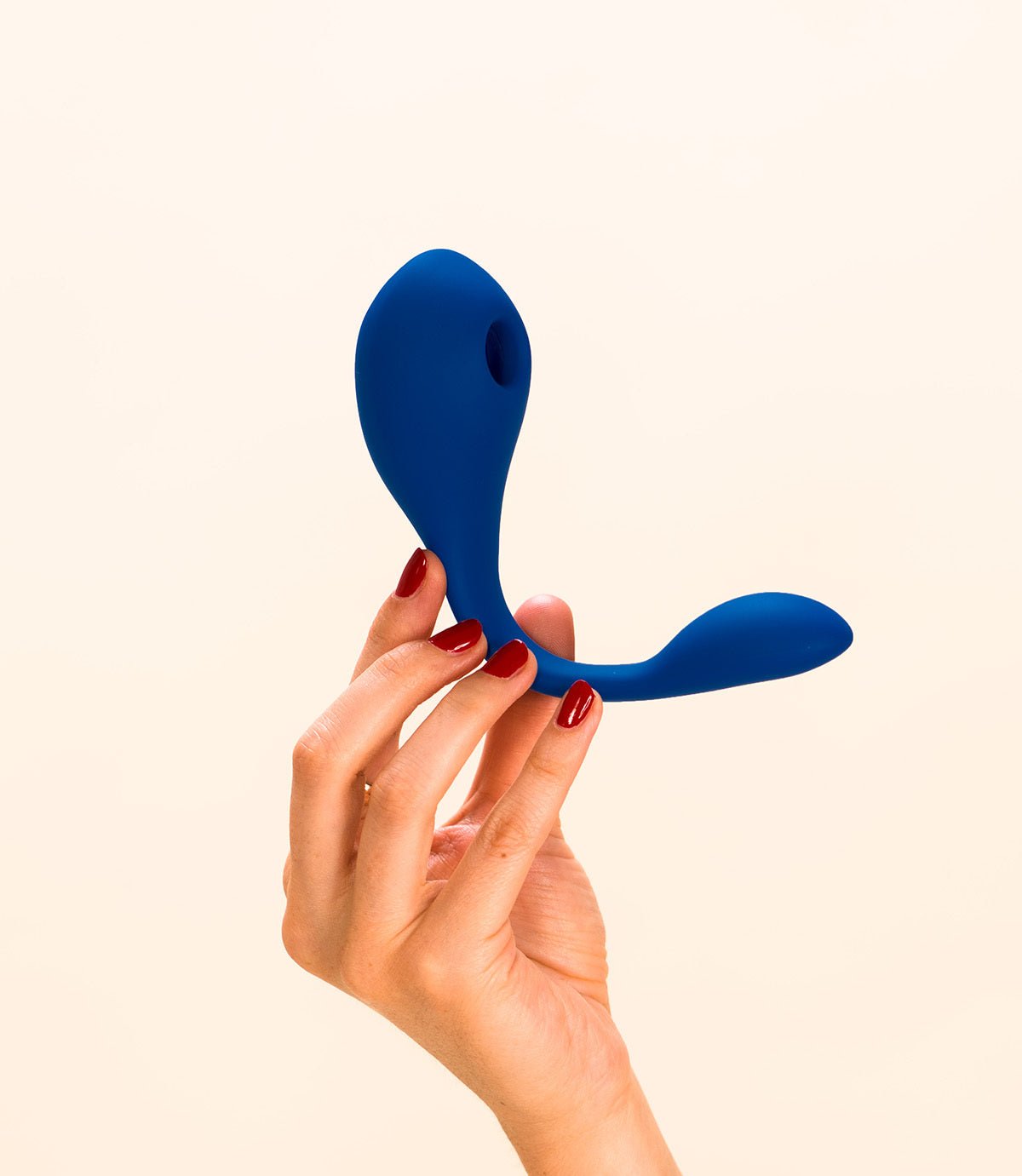
Meanwhile, the vibrator was invented as an antidote to hysteria. Not for pleasure, but again, to treat women. Basically, Coco 's predecessors were far less fun.
The sexual revolution
The sexual revolution put pleasure back at the center of life and attitudes towards masturbation began to change.
In 1992, the infamous "Master of My Domain" episode of the sitcom Seinfeld broke the taboo against discussing masturbation on television. But two years later, American surgeon Jocelyn Elders was fired for stating that young people should be educated about masturbation as a safe sexual practice.
Studies show that women still associate masturbation with guilt and shame. Today, attitudes are changing and practices are becoming more liberal, but there is still a long way to go to rid ourselves of this stigma surrounding female pleasure.
The history of female masturbation closely follows that of morals and sexuality. Morality and health have intertwined over the centuries, addressing a subject that pertains to both intimacy and society. A healthy practice for both body and mind, solo pleasure is a way to give oneself pleasure, explore one's limits, and truly learn about oneself . We highly recommend it!

Aline Arcis
You will surely like it
-
Coco
119,00€ -

Chouchou
109,00€ -

Lubricating Intimate Gel
13,00€ -

Cleansing Foam
15,00€
Coco

Chouchou

Lubricating Intimate Gel

Cleansing Foam


