


Geisha balls or vibrators: perineal rehabilitation at home
By Aline Arcis
|
Summarize this article with AI


Often ignored, sometimes mistreated during intense sports activity or childbirth, the perineum is nevertheless a super important muscle!
Contrary to popular belief, it plays an essential role in your daily life, and not just during your pregnancy: abdominal muscle tone, sensations during intimate relations, organ support… All of this is partly thanks to the perineum .
We explain how to take care of them alone or as a couple, with a professional or with a vibrator and above all, with the help of Geisha balls .
What is the perineum?
The pelvic floor in a nutshell
The perineum , also called the pelvic floor , is a group of muscles that form a band starting from the pubis and going to the base of the spine, the coccyx.
This group of muscles supports organs such as the bladder, uterus, and rectum.
It's constantly in use throughout the day, contracting without you even realizing it: when you sneeze, cough, or laugh, when you need to urinate, or even just when you're standing up. The perineum is an unsung hero.
Why the perineum is important
As its name suggests, it serves as a floor, providing support for many organs , such as the bladder, rectum, and anus, but also the vagina and uterus in women, and the prostate in men. Because yes, men have a perineum too!
For example, it is the perineum that contracts to keep the urethra closed. Therefore, if the perineum weakens or becomes lax, incontinence is possible.
This muscle is what will cushion the pressures exerted daily during running, or during a trampoline session for example.
It is also important for the sensations during sexual intercourse with penetration. A toned pelvic floor means more sensation, and therefore more pleasure. So it's in your best interest to have a well-toned pelvic floor.
What are the causes of its subsidence?
The causes of perineal prolapse are varied: the most well-known is childbirth , during which the perineal muscles are strained and end up being too relaxed.
But it also happens that very intense sporting activity , such as high-level bodybuilding, during which the perineum is put under unsuitable strain, contributes to its loosening.
Smoking can also play a role in the tone of the perineum .
Perineal prolapse: what are the consequences?
If your perineum is too loose or sagging, immediate problems can appear: incontinence, constipation, or a feeling of heaviness in the pelvis.
You may also experience a decrease in sensation during penetrative sex.
“ According to A. Shafik, proper contraction of the perineal muscles , including the puborectal bundle of the levator ani muscle which is connected to the vagina [6], improves the perception of vaginal sensations and promotes better penile integration into the vagina.” The Benefits of Perineal Strengthening for Female Sexual Function , Medical Thesis by Bérangère Ferrier
Don't panic, though! With a few toning exercises and proper care, you'll have a pelvic floor in top condition in just a few weeks. Thanks to proper pelvic floor rehabilitation , your muscles will be fully functional again!
When should you rehabilitate the perineum?
Taking care of your perineum before childbirth
The perineum, due to its "floor" position, is subjected to significant tension because of the baby's weight in the womb . In addition, during pregnancy, the body secretes hormones that relax the muscles, tissues, and ligaments to prepare for the passage of the baby's head.
We strongly advise you to regularly strengthen your pelvic floor muscles before giving birth, in order to protect them, limit complications and discomfort during pregnancy, and thus prepare you for the postpartum period . Talk to your physiotherapist to learn the right techniques.
After childbirth
After childbirth, this is generally when most women turn to perineal rehabilitation . Whether it was a vaginal birth or a cesarean section, the perineum has been strained during pregnancy as it had to support the weight of a baby . The pelvic floor therefore gradually weakens over nine months.
Pelvic floor rehabilitation should begin even before resuming sports activities, to strengthen the pelvic floor and abdominal muscles, which were heavily used during pregnancy. These muscles need to regain good tone to support you during physical exercise.
With the help of a midwife or physiotherapist , you can start rehabilitation sessions approximately 6 to 8 weeks after birth .
A little tip we love: the 10 sessions prescribed by a gynecologist-obstetrician are 100% reimbursed by Social Security !
After an episiotomy
Episiotomy , which is a surgical incision of the perineum made during childbirth, obviously requires perineal rehabilitation , accompanied by close medical follow-up .
Regularly massaging your perineum will promote and facilitate healing. You can do it alone, with a partner, with the help of a professional, and/or with accessories such as Geisha balls .
Perineal rehabilitation in case of gynecological problems
We have already discussed dyspareunia , which is an involuntary contraction of the perineal muscles . This movement "closes" the entrance to the vagina, making penetration difficult or even painful.
This condition can be debilitating, as the contractions can be very intense and completely prevent any form of penetration . This is known as vaginismus .
Perineal rehabilitation can help alleviate this gynecological disorder: by becoming aware of your perineum, learning to contract it voluntarily, and in the same way to relax it.
“ Before beginning pelvic floor strengthening exercises, it is important to engage in a process of self-awareness . This initial step will allow the patient to learn about all aspects of pelvic floor anatomy , that is, its function and role, and also to learn how to contract it consciously . ” (Benefits of pelvic floor strengthening for female sexual function , Medical thesis by Bérangère Ferrier)
Massages will also allow painful areas to relax , and ultimately make penetrations possible without pain .
The perineum at the onset of menopause
Menopause , and the hormonal changes it triggers , can lead to muscle relaxation, as well as a lack of vaginal lubrication .
In the same way that perineal massages will help you alleviate pain during dyspareunia disorders, perineal rehabilitation exercises can relieve the symptoms of menopause.
How to rehabilitate the perineum?
Perineal rehabilitation: with a healthcare professional or at home?
We obviously advise you to contact healthcare professionals such as midwives and specialized physiotherapists, but it is possible to take charge of your rehabilitation at home!
Like any other muscle in the body, your pelvic floor needs regular exercise to train it to contract and relax. Regular exercises will help you regain tone and elasticity by teaching the muscles to relax.
Making an appointment allows you to commit to a certain regularity, and it is precisely this diligence that will allow you to obtain results.
Quick tip: use mobile apps to motivate yourself and set reminders so you don't forget to train regularly!
A short breathing guide to contracting your pelvic floor
Contracting your pelvic floor muscles is easy! We all do it unconsciously when we need to go to the toilet. The movement you make to hold it in is indeed a contraction of the pelvic floor !
-
To voluntarily engage the perineum, think about those moments; you will instinctively pull in your lower abdomen and feel the contraction of the pelvic floor.
-
Breathe in through your rib cage and contract your pelvic floor muscles, trying to maintain the effort for 2 seconds. Repeat the exercise several times.
-
The rest time should be double the effort time, i.e. for 5 seconds of effort, you need 10 seconds of rest.
We advise you to train regularly for a few minutes every day.
You can absolutely do them while watching a series, putting on makeup, in the shower, on public transport—in short, whenever you like. The important thing is to do it regularly . We promise, it's worth it!
Our tips: remember to go to the toilet beforehand, and don't put pressure on yourself .
What positions are best for rehabilitating your pelvic floor?
Standing position
Ground yourself and follow this short rehabilitation guide:
-
Stand up straight with your feet flat on the floor and your arms at your sides. Take a deep breath, then contract your pelvic floor muscles as you exhale . Try to maintain this exhalation and contraction for as long as possible.
-
You can then release for 20 seconds.
-
With a little practice, this series can be done 10 times in a row.
The reclining position
We offer several reclining positions.
The starting position
-
Lie on your back, let your arms rest along your body.
-
Bend your legs so that the soles of your feet are flat on the floor. Your back should be firmly against the floor, or whatever support you have chosen. If you are uncomfortable, you can place a cushion under your lower back.
-
You must then repeat the same exercise as when sitting, take a deep breath, and contract your perineum during the exhalation .
The master position
From the first lying position, you can do the same exercise by lifting your buttocks off the ground.
-
The feet are always flat, and the upper back is pressed against the support, only the hips are lifted off and trying to go as high as possible towards the ceiling.
-
Take a deep breath in and then exhale slowly while keeping your perineum contracted .
-
Hold your breath while pulling in your stomach, expanding your chest, and contracting your pelvic floor muscles (yes, it's not the master position for nothing). Try to hold for 10 seconds.
What accessories are needed to rehabilitate your pelvic floor?
Vibrators: allies in perineal rehabilitation
You can of course use your vibrator to take care of your perineum!
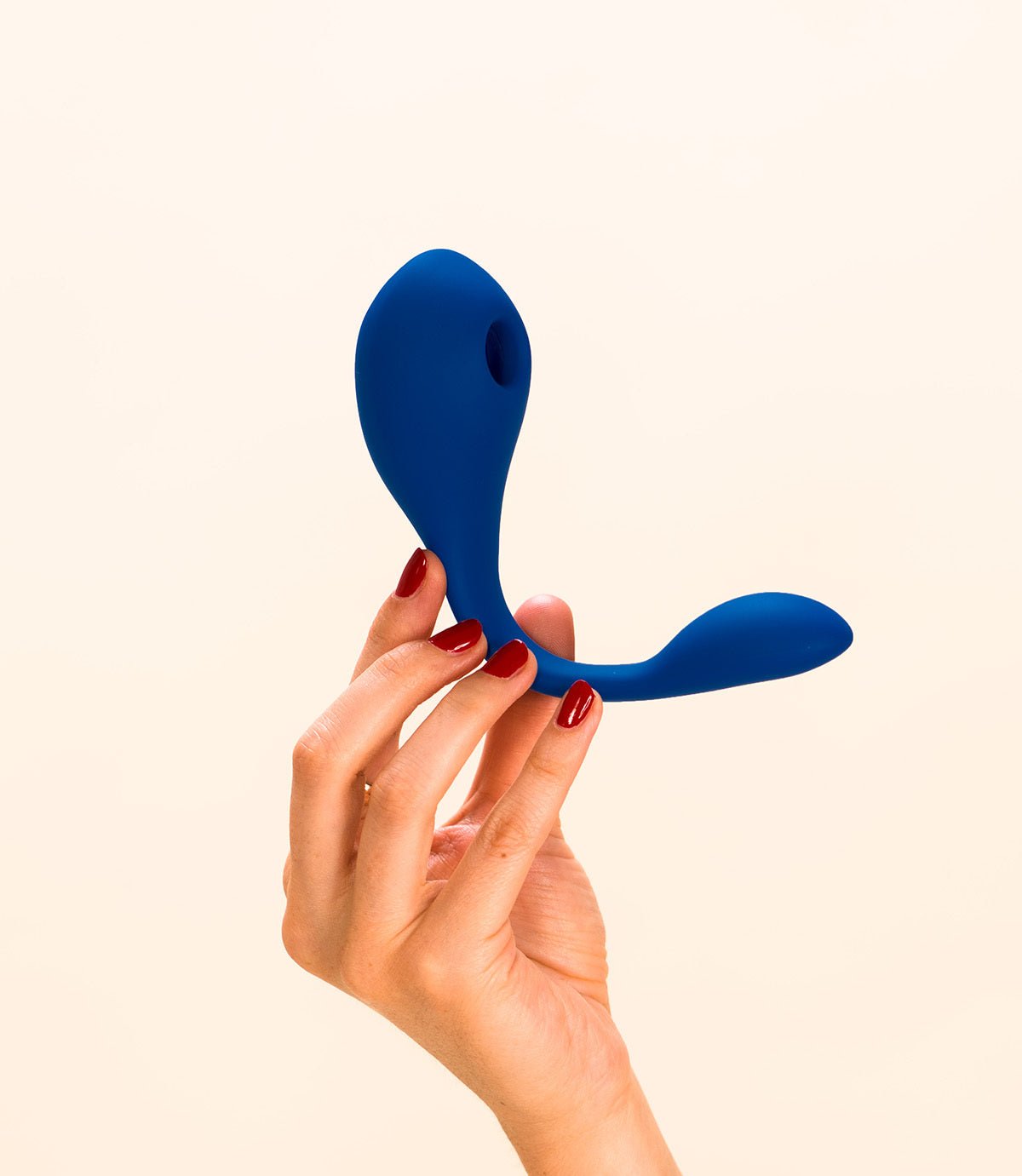
Here we explain how to strengthen your perineum with a penetrating vibrator, such as Coco or Chouchou for example.
Using a vibrator can help you better understand the shape and strength of your pelvic floor. Once inserted and activated, contract your pelvic floor muscles around the vibrator.
To rehabilitate your pelvic floor through penetration , you need to be relaxed , just as you would for any other sexual activity. Remember to use lubricant if natural lubrication isn't sufficient, and above all, take your time!
Of course, it is absolutely necessary to clean your sex toys before each use !
A little exercise for you: with Coco 's random mode , try contracting your perineum when Coco vibrates, then relaxing when the vibrations stop.
The vibrations will boost blood circulation in your perineum, which will increase the tone of your perineum, but also the sensitivity of your vaginal walls.
It is ideal in combination with sessions with a physiotherapist or midwife , especially to prevent urinary incontinence and improve your sensitivity during intercourse.
Geisha balls to rehabilitate your pelvic floor
What are Geisha balls?
Geisha balls are great accessories for retraining your perineum .
Several models exist: the most common is the model with two balls, but there are also single-ball models (especially for women suffering from pelvic organ prolapse ).
Weight is also a determining factor when buying Geisha balls: beginner models are lighter, and you can then increase the weight and therefore the difficulty as rehabilitation progresses.
Often recommended by healthcare professionals, Geisha balls allow for proper perineal rehabilitation exercises .
Indeed, many women push on their pelvic floor muscles instead of tightening them during contractions. Geisha balls help to better understand the movement and perform it correctly.
How do they work?
In practical terms, how do Geisha balls work?
-
The two balls are inserted into the vaginal area, with a small cord for removal that comes out of the vagina.
-
One ball is placed high in the vagina, and the second will move down or up depending on the perineal contraction.
-
Depending on the Geisha balls chosen, when the moving ball touches the stationary one, both balls vibrate. This playful aspect helps maintain your motivation throughout the rehabilitation process.
You can practice the recommended exercises later, or simply go about your usual activities. Your pelvic floor will naturally contract to keep the Geisha balls in place, and this reflex movement will tone the muscle fibers!
You can use Geisha balls daily, for 10 to 30 minutes a day. However, as with any exercise or rehabilitation activity, it's better to do shorter, regular sessions than a pelvic floor marathon once a week.
Our advice: if it hurts, if wearing the Geisha balls becomes too uncomfortable or painful, don't force it. Consult a healthcare professional and set up a more gradual rehabilitation program .
Taking care of your perineum is extremely important for your health, physical comfort and intimate fulfillment.
We recommend seeking advice from a healthcare professional beforehand. Consulting a midwife, physiotherapist, or gynecologist allows for a perineal and abdominal assessment . You will learn about your current muscle tone and which exercises are suitable.
Want to maximize your sensations during penetration? Turn to Kegel balls , great accessories to complement Geisha balls, for a healthy perineum.

Aline Arcis
You will surely like it
-
Coco
119,00€ -

Chouchou
109,00€ -

Kegel balls
49,00€ -

Lubricating Intimate Gel
13,00€
Coco

Chouchou

Kegel balls

Lubricating Intimate Gel


