


Asexuality: how do you know if you're asexual?
By Coline Levin
|
Summarize this article with AI


You know us, at Puissante we like to understand all sexualities: from the most traditional to the most extravagant, from the most exotic to the most conventional. Today, we've decided to tackle a topic that's still too little covered: asexuality.
If you didn't know, "asexual" is the famous "A" in LGBTQIA+.
This sexual orientation (because yes, it is one) suffers from many prejudices and misconceptions. Do asexual people never have sex? Are they capable of falling in love?
According to a 2023 Ifop survey, 12% of French people identify as asexual. So, we're answering all your questions about this form of non-sexuality, which still concerns more than one in ten people.
What does "being asexual" mean?
A simple definition of asexuality
Asexuality is a sexual orientation like any other. It refers to not being sexually attracted to someone, regardless of their gender. In other words, an asexual person does not feel sexual attraction towards other people.
However, as we'll see, asexual doesn't mean zero sex, zero libido, or zero fantasies.
In the 19th century, asexuality was considered by researchers (men, of course) as an anomaly, a mental disorder, an "anesthesia of sexual functions." After studying the history of sexualities a bit, we quickly realize that anything that doesn't fit into the heteronormative box is considered deviant.
Fortunately, we've moved past that. And this is thanks in particular to the fabulous work of the German sexologist Emma Trosse. She defended the rights of asexual and LGBTQIA+ people and encouraged society not to discriminate against this part of the population.
If you didn't know, April 6th is International Asexuality Day!
Can asexual people fall in love?
Yes, of course! Here, we're talking about the absence of physical and sexual attraction towards someone else, not romantic feelings.
Asexual people can absolutely fall in love with a man, a woman, neither, or both, and live in a couple. The only difference with so-called "sexual" people is that they don't feel the need to materialize their love through carnal relations. However, this doesn't mean their feelings are less strong or authentic.
In an asexual couple, there can also be tenderness and intimacy without sexual intercourse: caresses, tender moments, kisses... The important thing is that everyone finds what they need and doesn't feel "forced."
Moreover, contrary to popular belief, asexual people do not necessarily suffer from their sexual orientation. They don't feel a lack or an emptiness. Asexuality is their norm.
To hear the testimony of an asexual woman, we highly recommend the podcast episode "Anna and Asexuality," available on Radio France.
Asexuality and intimacy: answers to your questions
Is it possible to be asexual and have a libido?
The answer is yes, it's possible, but it's not systematic. Like all sexual orientations, asexuality is a spectrum, as explained by Anna Mangeot, author of Asexuelle, available from Larousse éditions :
"We asexuals are not attracted to anyone, but that doesn't prevent a large part of asexuals from having libido, from having fantasies, from practicing masturbation. We simply don't feel that kind of appetite that draws us to others and makes us feel the need to press against them."
Note that in this respect, the dictionary definition of asexuality is not accurate. It states that an asexual person feels "neither attraction, nor fantasy, nor libido." This may be true for some people, but it's not always the case.
An asexual person can very well feel libido at certain times, have their own fantasies, and consider sex as something very positive (but not vital). It's also possible that they don't have any at all, or even feel deeply repulsed by sexuality. There are no rules when it comes to asexuality.
This notion of a spectrum is very important. It concerns not only asexuality but all sexual orientations, including heterosexuality and homosexuality. Even if you feel 100% straight, it's "healthy" for a part of you to consider homosexuality as a possible orientation, a door that is currently closed but that can open at any time in your life!
How can I have an orgasm if I'm asexual?
Asexual people can absolutely feel a libido, a desire to explore themselves and to have orgasms. Masturbation is an excellent way to give yourself pleasure alone. If you are asexual, don't hesitate to please yourself:
-
With your fingers, by making small rotating movements first around your vulva, your clitoris, then pushing the exploration a little further,
-
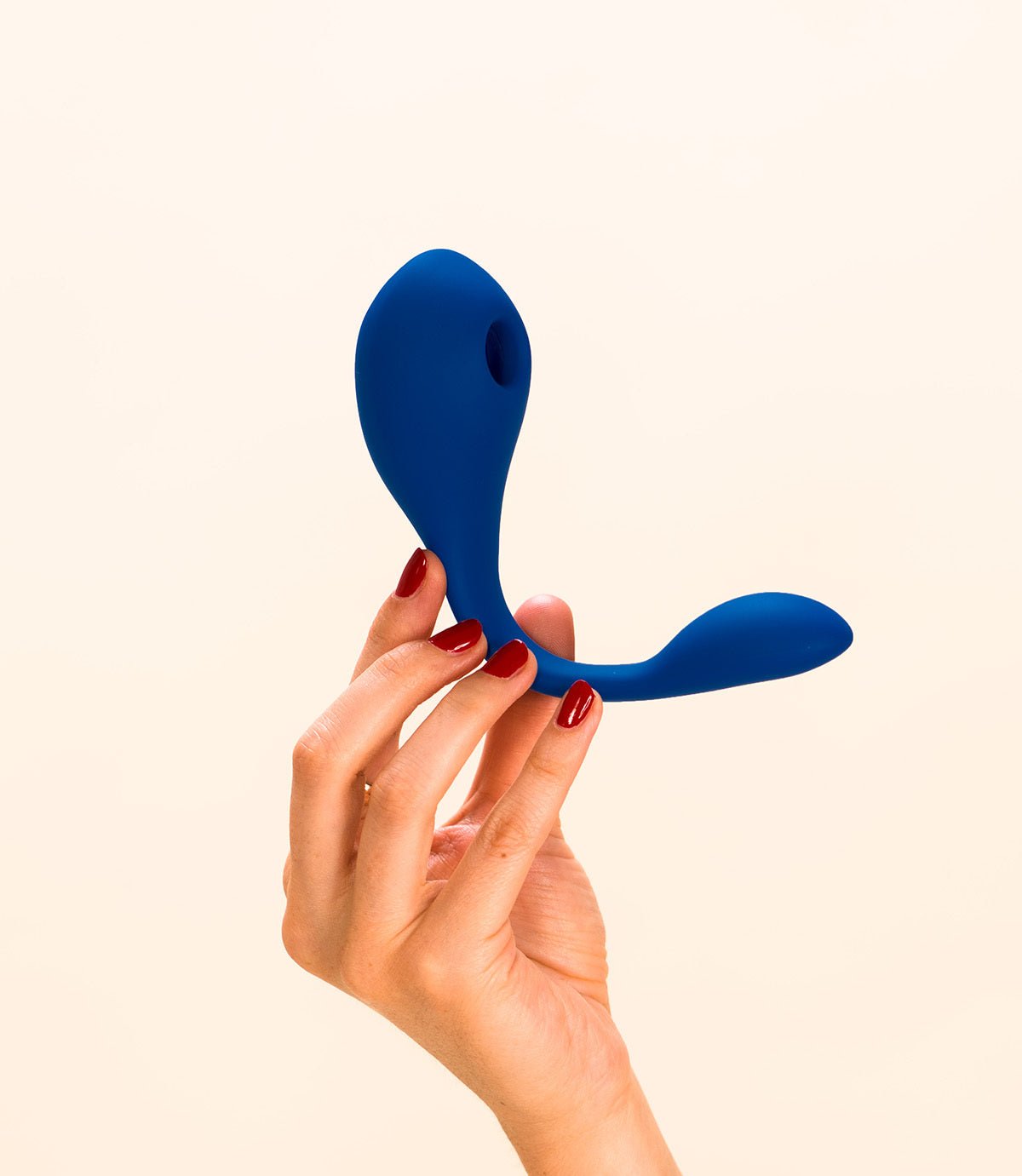
With a sex toy, like a clitoral stimulator, to enjoy heightened sensations. An excellent way to discover your erogenous zones, alone or with a partner, but always at your own pace.
Moreover, you can absolutely plan a little masturbation session when the desire arises, then not use your vibrator for months. It will always be there when you need it! Just remember to clean it thoroughly after each use.
I am asexual: how do I talk about it with my partner?
If you think you are asexual (or if you are asking yourself the question) talking about it with your partner can be both liberating... and frankly anxiety-inducing. Fear of hurting, fear of not being understood, fear that the other person feels rejected or less desirable.
However, putting words to what you feel is often the first step to finding a more serene intimacy.
Firstly, because it allows you to no longer feel "forced" in your sexuality. Verbalizing what you are going through is setting a clear framework: what you feel, what is comfortable for you, and what is not (or no longer).
Secondly, because your partner may have already perceived that something was happening. A drop in desire, avoidance, a diffuse unease... Putting words to it can avoid many misunderstandings and painful interpretations.
Take the time to explain. Remember that:
-
it's not personal,
-
it's not him or her that you don't desire,
-
it's simply that you don't feel, or feel little, sexual attraction in general.
Asexuality is a spectrum, and it can evolve over time. There are a thousand ways to be a couple, a thousand ways to be intimate, a thousand possible rhythms. Being asexual does not mean loving less, nor being less emotionally invested. It simply means that your body and your desire do not function according to majority norms.
Discussion is key. It opens the door to other forms of intimacy: more tenderness, more gentleness, other ways of connecting, or even other relationship models if that makes sense for both of you.
There is no right or wrong way to do things. The essential thing is that everyone feels respected, heard, and free to be themselves.
Asexuality is neither a lack nor a problem to solve. It is a way of being in the world, of feeling (or not feeling) desire, and of building connections in one's own way. If this word helps you to understand yourself better, to set your boundaries, or to feel less alone, then it has already fulfilled its role.
There is nothing to "correct," nothing to force. Just to listen to yourself, to respect yourself and, if you wish, to talk about it. Because ultimately, sexuality (or its absence) only makes sense if it reflects who you are.
en/en/
Coline Levin
You will surely like it
-
Coco
119,00€ -

Le Bisou
99,00€ -

Lubricating Intimate Gel
13,00€ -

Intimate moisturizing and soothing balm
19,00€
Coco

Le Bisou

Lubricating Intimate Gel

Intimate moisturizing and soothing balm


