


Difference between vagina and vulva: the mysteries of female anatomy
By Aline Arcis
|
Summarize this article with AI


Spoiler alert: the vagina and the vulva are not interchangeable terms, but rather two distinct body parts. If you didn't know that, don't panic, we've all been guilty of this confusion, whether through ignorance or convenience.
Today, many initiatives are putting female anatomy back at the center of the conversation. For example, we have seen the emergence of drawings of the clitoris or workshops on self-exploration (or autogynecology ) of one's intimacy.
And it's so cool to reconnect with this often-overlooked part of your body. In this article, we'll clear up the confusion between vulva and vagina. A crucial first step to help you take back control of your pleasure!
Why is female anatomy so poorly understood?
In 2021, a British institute conducted a study to assess the public's knowledge of female sexual anatomy.
Among those surveyed, only 46% correctly named the three orifices of the external genitalia. The institute noted a high rate of error regarding the urethra and the clitoris. The clitoris was confused with the urethra in 9% of cases, and vice versa in 49%. The vagina was among the most well-known genital structures, with 67% correct answers, but only 9% were able to recognize all seven structures, namely:
-
the labia majora,
-
the labia minora,
-
the clitoris,
-
the urethra,
-
the vagina,
-
the perineum,
-
the anus.
The female genitalia are located partly internally . Granted, they are more difficult to access than the penis.
Add to that the centuries of taboos surrounding self-exploration andfemale masturbation , and we end up treating our own anatomy like a grumpy neighbor: we know it's there, but we only contact it when we need help.
For the lucky ones who have had some sex education classes, few teachers encourage making the connection between a cross-section diagram and our very much alive body.
If you haven't already had the chance, we strongly encourage you to explore what lies beneath your mons pubis and between your legs . Take a moment to get to know yourself with the help of a pocket mirror, to feel even more comfortable in your own skin.
The difference between the vagina and the vulva
What is the vulva?
The vulva is actually what you may have confused with the vagina, as it is the external and visible part of your reproductive system.
It includes:
-
the mons pubis (or mons pubis),
-
the labia majora which protect,
-
the labia minora,
-
the urinary meatus (or urethral opening),
-
the external part of the clitoris with its hood,
-
the hymen,
-
the perineum,
-
the glands that line the entire vulva.
The labia majora ( or outer labia) protect the vaginal opening. They also cover the labia minora, the clitoris, and the urethral opening. The pubic hair helps protect against infection and maintain vaginal lubrication.
The labia minora are folds of skin, free of fat and hair, that cover the vaginal opening, the clitoris, and the urethral opening. They also serve to cover the glans of the clitoris. The labia minora are also very useful for lubrication during sexual intercourse.
The clitoris deserves a whole article of its own, we promise we'll prepare that for you soon!
There are as many vulva shapes as there are people. Some have protruding inner labia, others have asymmetrical labia, while still others have a vulva where the labia majora cover the clitoris and labia minora. Their color also varies from person to person without this being a cause for medical concern.
Let's celebrate the diversity of vulvas and put a definitive end to the cult of the smooth vulva inherited from pornographic films . The very idea of a "normal" vulva doesn't exist; all vulvas are found in nature!
What is the vagina?
So if the vagina isn't the vulva, where is it? The vagina is the internal part of your genitals . It connects the entire reproductive system, from the ovaries and uterus to the vulva.
It is a muscular duct that measures on average 8 cm in length . As it is a muscle, it has the ability to contract and dilate, particularly during childbirth and in cases of intercourse or masturbation with penetration.
Its role is to act as an intermediary between the inside and outside of the body . On the outward side, it allows vaginal secretions, menstrual flow, and the passage of fetuses. On the inward side, it provides a warm and welcoming space for both pleasure and reproduction.
The vaginal canal also has its own pH, which is acidic and ranges between 4 and 4.5. It is protected by the vaginal flora, which creates an environment unfavorable to the proliferation of bad bacteria and thus prevents vaginal infections.
Taking care of one's intimacy
Taking care of your vagina
Understanding the difference between the vagina and the vulva helps you know how to care for them.
Unlike the vulva, the vagina has its own self-cleaning system . It cleans itself, and this is partly what causes the secretion of white discharge called leukorrhea .
These discharges are excellent indicators of your vagina's good health; by lubricating itself, the organ naturally eliminates waste . Wonderful, isn't it?
The vaginal wall is lined with numerous microorganisms, the majority of which are lactobacilli. Forcing vaginal douching or vaginal steaming (yoni steaming) would disrupt the delicate balance of this vaginal flora, leaving the door wide open to infections such as vaginitis.
When it comes to pleasure, the vagina is the realm of the G-spot. We can then stimulate it by pressure with an object of your choice (vibrator, dildo, etc.), with your fingers or with the help of your partner.
Taking care of your vulva
What is called intimate hygiene are the practices that focus on the care of the vulva.
Paying careful attention to your vulva also helps to protect the vagina and prevent infections such as yeast infections, as well as reducing the risk of cancer.
Regular washing with a gentle, pH-neutral product eliminates most germs while protecting the balance of the vulvar flora. Say goodbye to perfumed intimate wipes and harsh cleansing products.
Loose-fitting clothing and underwear made of natural fibers are other ways to care for your vulva. Of course, you can wear extravagant lingerie, but let your intimate area breathe from time to time.
We suggest you try a night without underwear, both for the care of your vulva and to enhance your overall body experience. Self-care and self-love while you sleep: we love it!
When it comes to pleasure, the clitoris is the heart of female pleasure. Its branches, extending from under the labia majora to around the reproductive system, allow for maximum impact with proper stimulation. We've even put together a little guide to female masturbation for you .
We hope that the difference between a vulva and a vagina becomes clearer to you after reading this article.
By taking a closer look at female anatomy, we imagined what could really make you feel good and we brought… Coco into the world !
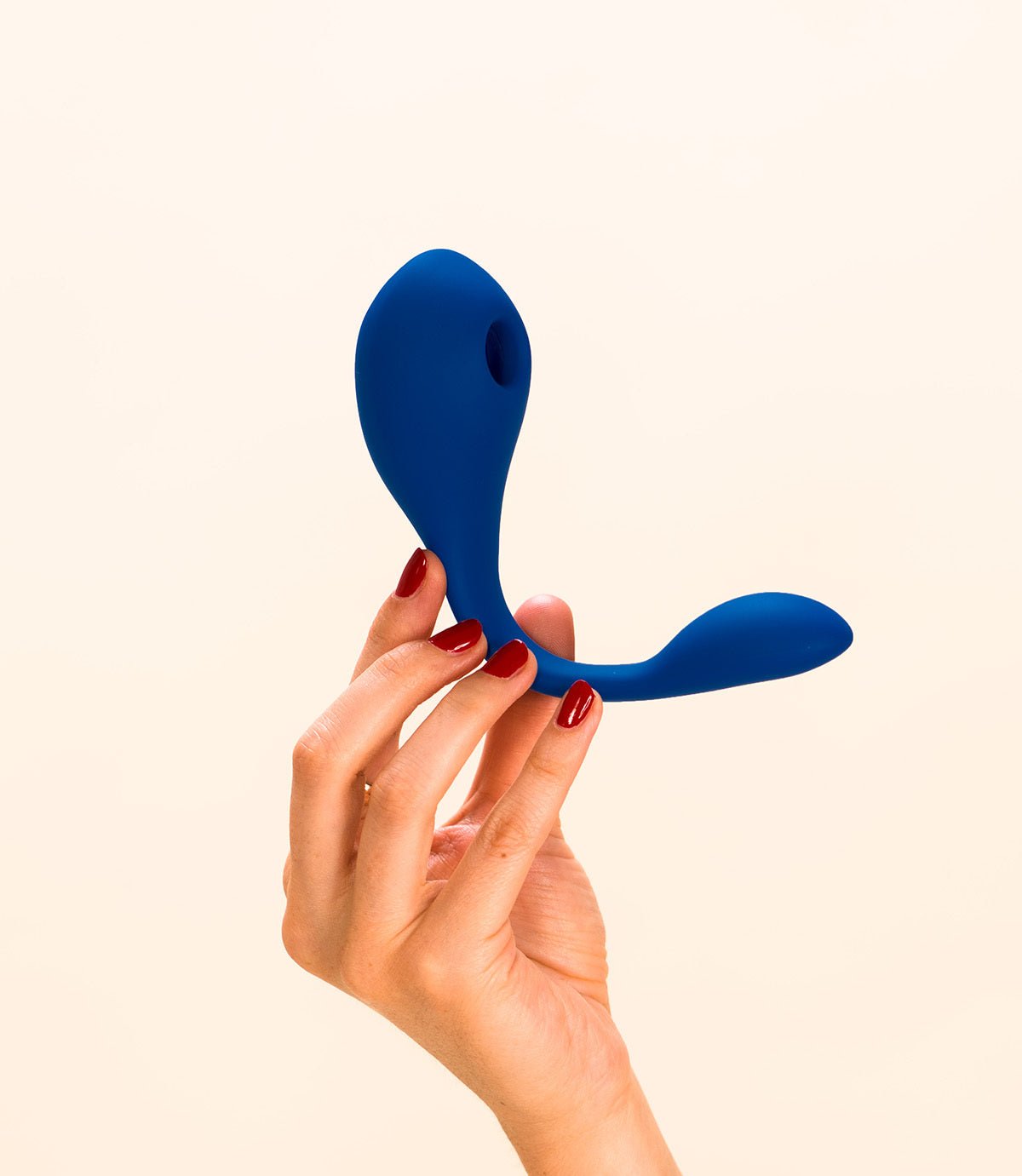
Our favorite vibrator offers both vaginal stimulation through vibration and penetration, and clitoral stimulation with its suction head . Check out the customer reviews from those who have experienced pleasure in both their vaginas AND vulvas!

Aline Arcis
You will surely like it
-

Intimate moisturizing and soothing balm
19,00€ -
Coco
119,00€ -

Chouchou
109,00€ -

Cleansing Foam
15,00€

Intimate moisturizing and soothing balm
Coco

Chouchou

Cleansing Foam


